How Recruiters Read Your Resume in the First 7 Seconds (And What They Actually Notice)

Most resumes don't get read. They get scanned.
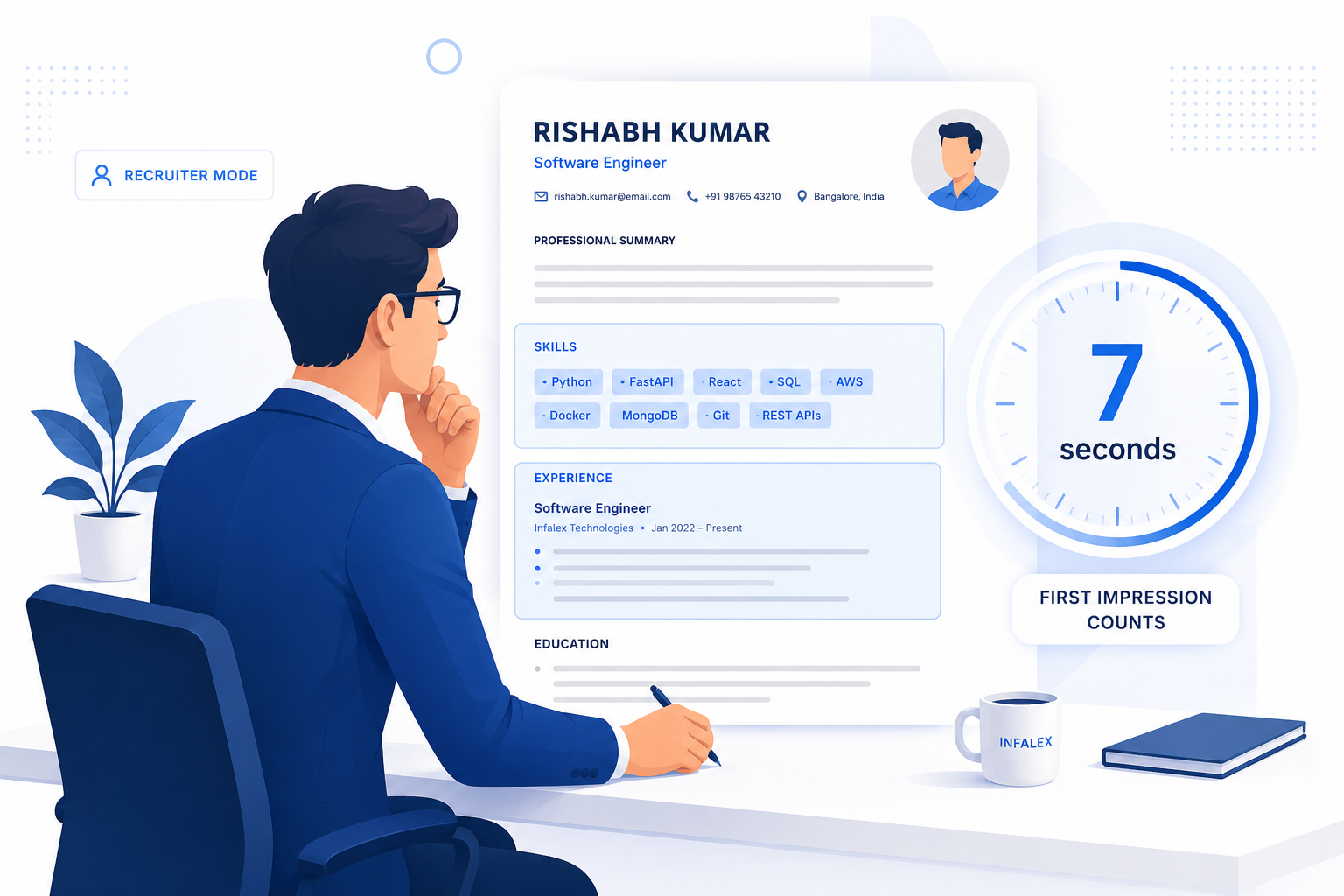
You've probably heard the "7 seconds" figure — the idea that recruiters spend about seven seconds on each resume before deciding whether to keep reading. That number originates from eye-tracking studies by staffing firms like Ladders, but it's often misquoted as a hard rule. It isn't. Seven seconds is closer to the average length of an initial scan — the first pass where a recruiter decides if your resume deserves a closer look. Some get two seconds. Others get thirty. The difference comes down to how quickly a recruiter can find what they're looking for.
Why Scanning, Not Reading
A single job posting can attract 300 to 1,000 applications. No recruiter reads every word — it's triage. They open your resume looking for fast confirmation: does this person's background match what we're hiring for? If the answer isn't obvious within seconds, your resume goes into the pile that rarely gets revisited.
The question isn't "how do I trick a recruiter into spending more time?" It's simpler: how do I make the relevant information impossible to miss?
What a Recruiter's First Scan Actually Looks Like
Research suggests recruiters follow an F-shaped reading pattern — heavy attention on the top and left side, fading as they move down. Here's roughly how those seconds break down (keeping in mind that this model is illustrative, not universal — different recruiters have different habits):
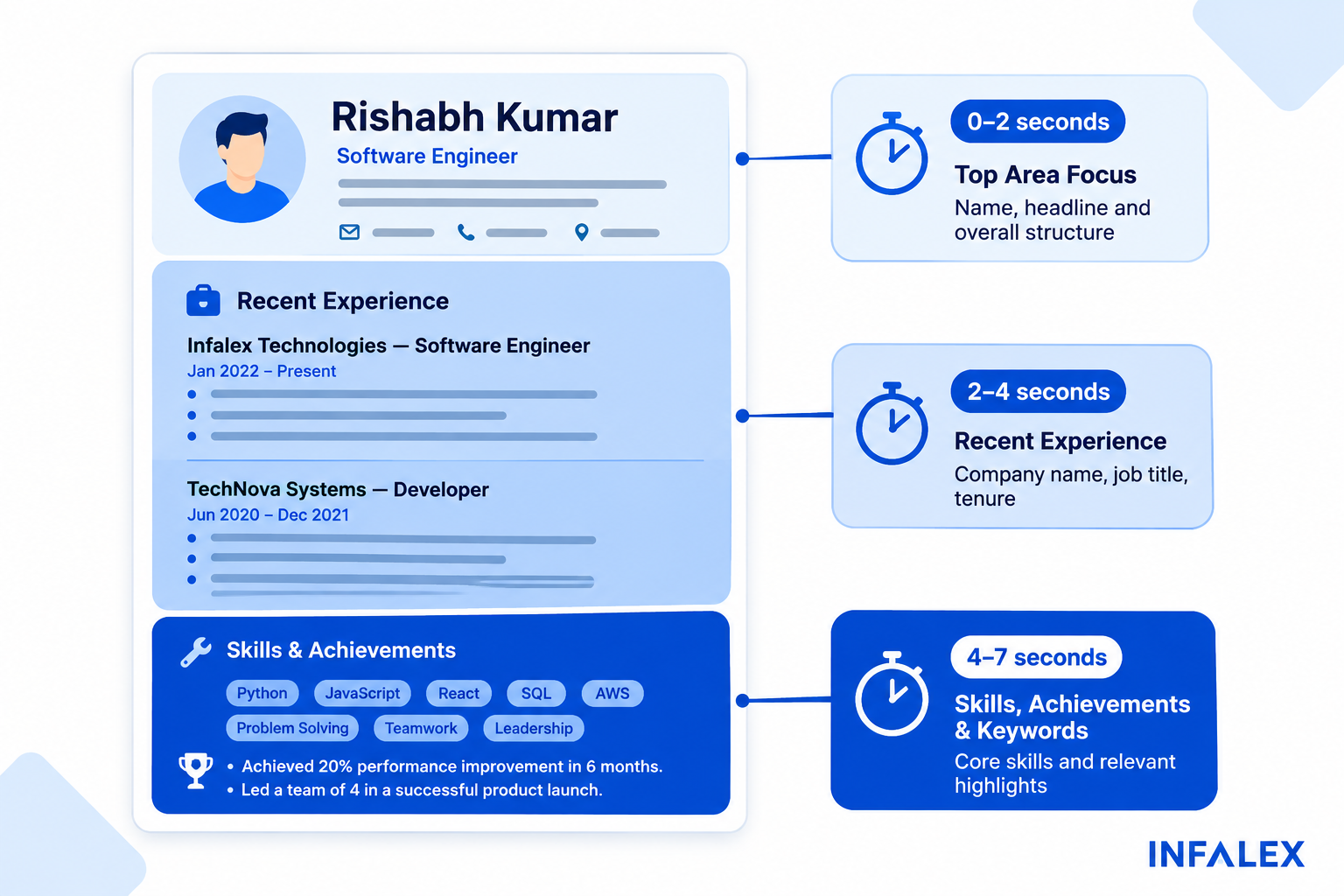
0–2 seconds: Before reading a word, they register your resume's visual structure. Clean layout or wall of text? They notice your name, current job title, and whether the formatting looks professional.
2–4 seconds: Their eyes move to your most recent role — company name, title, how long you were there, and whether your career direction makes sense for the open position.
4–7 seconds: Now they're scanning for specifics — relevant skills and technologies, measurable achievements, keywords that match the job description. This is the "should I keep reading?" moment.
If there are enough relevant signals by this point, the recruiter slows down and actually reads. If not, they move on.
What Earns a Deeper Read (and What Gets You Skipped)
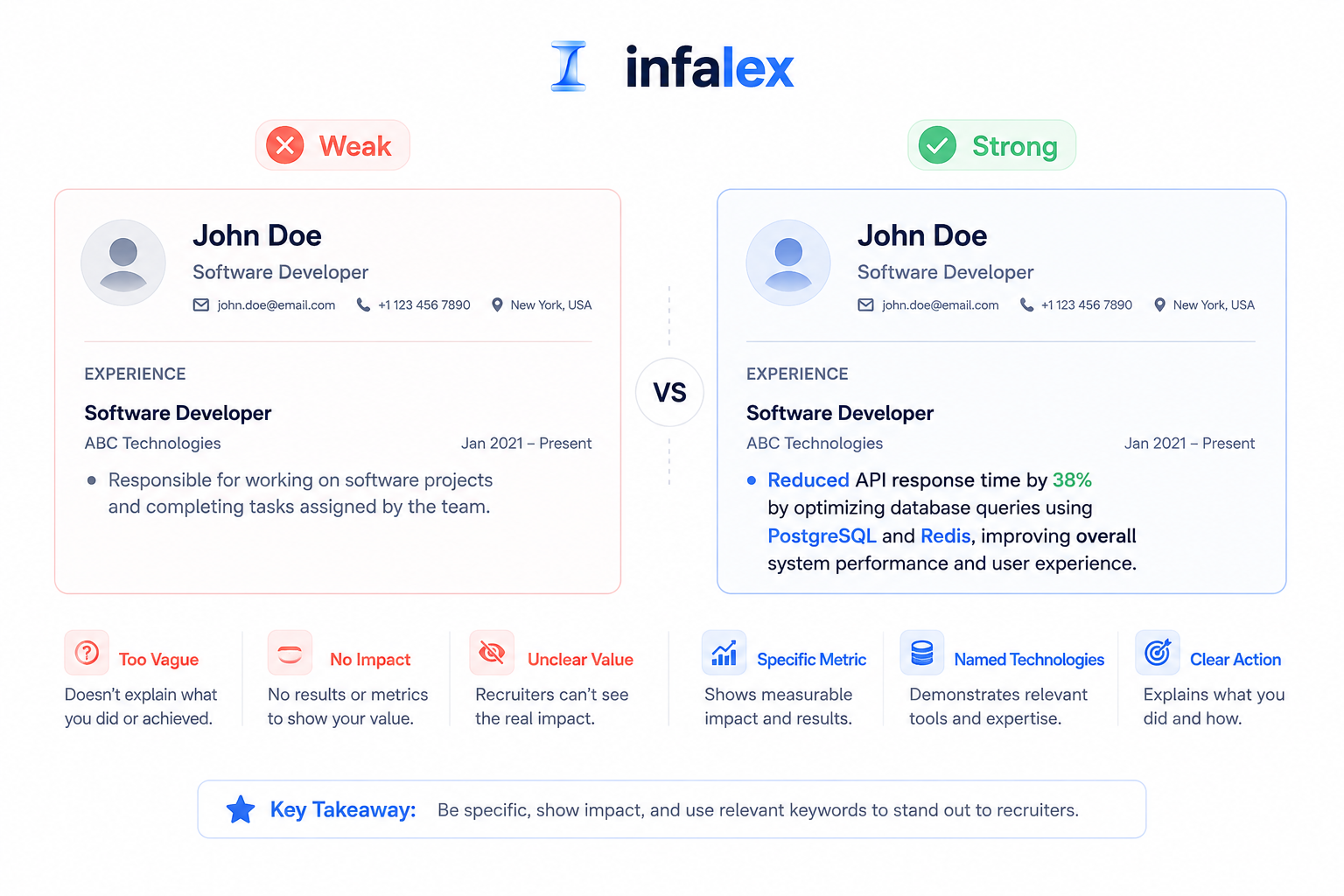
Recruiters slow down for: quantified achievements ("Reduced API response time by 38%"), recognizable company names or technologies, a clear match to the job description's language, and a strong two-to-three sentence professional summary at the top.
Recruiters move on when they see: dense paragraphs instead of bullet points, duties listed instead of achievements ("Responsible for managing social media" tells me your job description, not your impact), obvious formatting issues, spelling errors in technical terms, or a resume that clearly wasn't tailored to the position.
The pattern is consistent: specific beats vague, every time.
Consider the difference:
Weak: "Responsible for working on software projects and helping the team improve application performance."
Strong: "Reduced API response time by 38% by optimizing PostgreSQL queries and implementing Redis caching for high-traffic endpoints."
Both describe performance work. But the second version names what you did, how you did it, and the measurable result — which serves as a keyword match for ATS systems and a credibility signal for the human reader simultaneously.
The ATS Layer Before the Human Layer
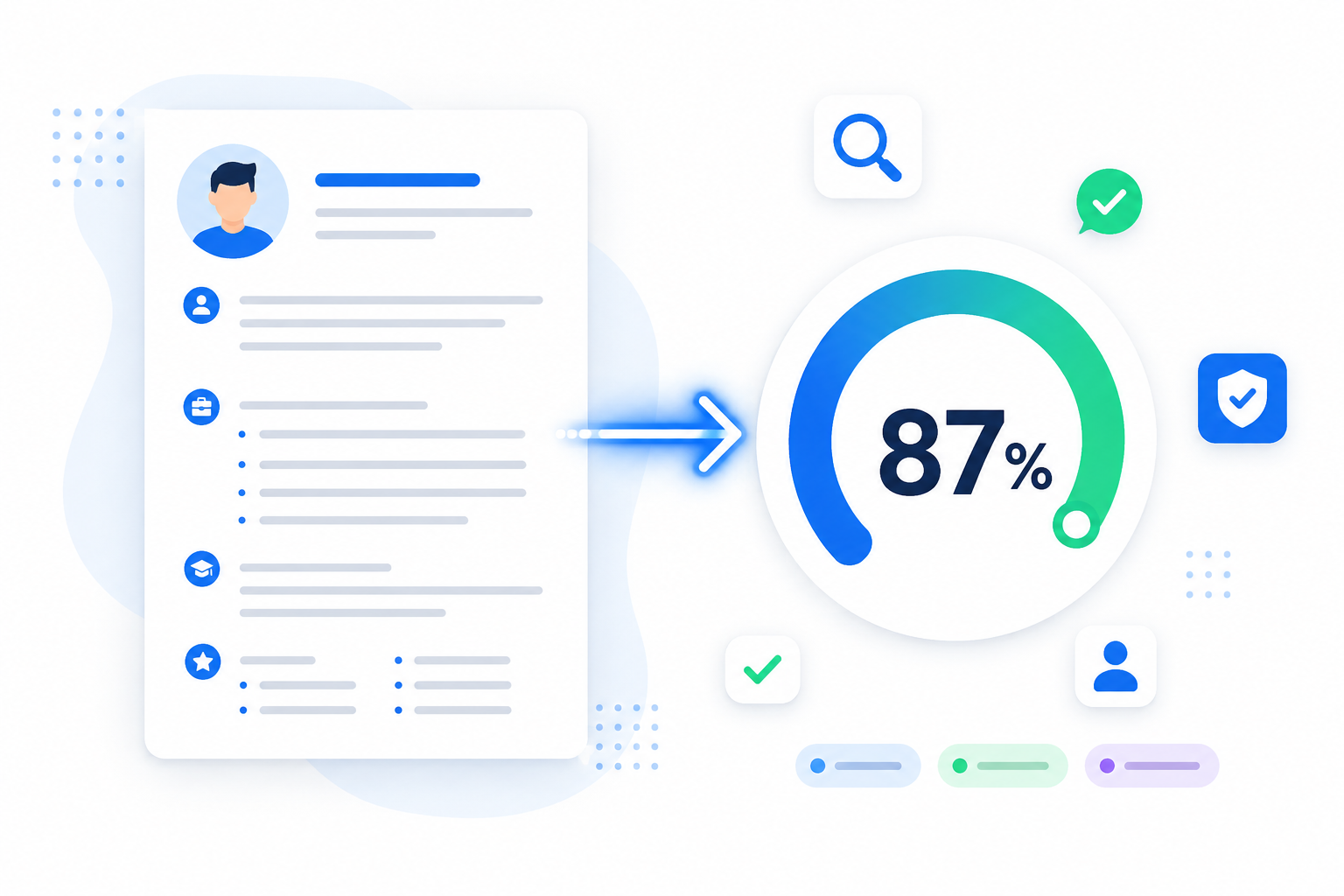
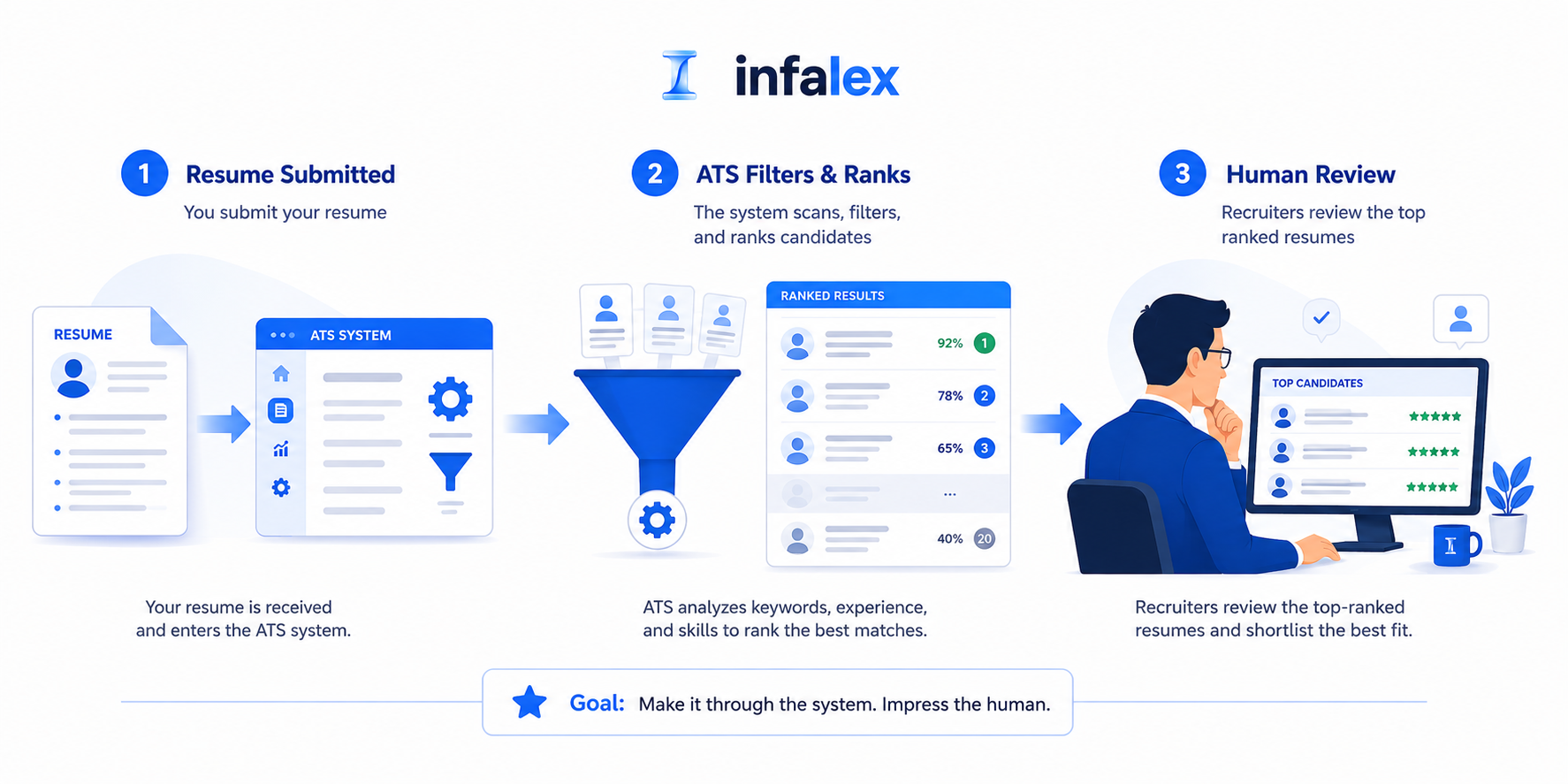
Before a recruiter ever opens your resume, an Applicant Tracking System has likely already parsed, scored, and ranked it against other applicants. Passing ATS doesn't guarantee a recruiter will like your resume — the machine checks keyword matches and formatting; the human evaluates context and career fit. Your resume needs to work for both: clean formatting the ATS can parse (single column, standard headings, text-based PDF) and compelling content a human finds relevant.
Tools like Resumetra can show you what the machine sees — ATS compatibility, keyword gaps, and formatting issues — before you submit. Use the job description's exact terminology where it naturally fits. If they say "stakeholder management," use that phrase, not "working with different teams." For more on keyword strategy, see our guide on resume keywords recruiters look for.
The 7-Second Resume Test
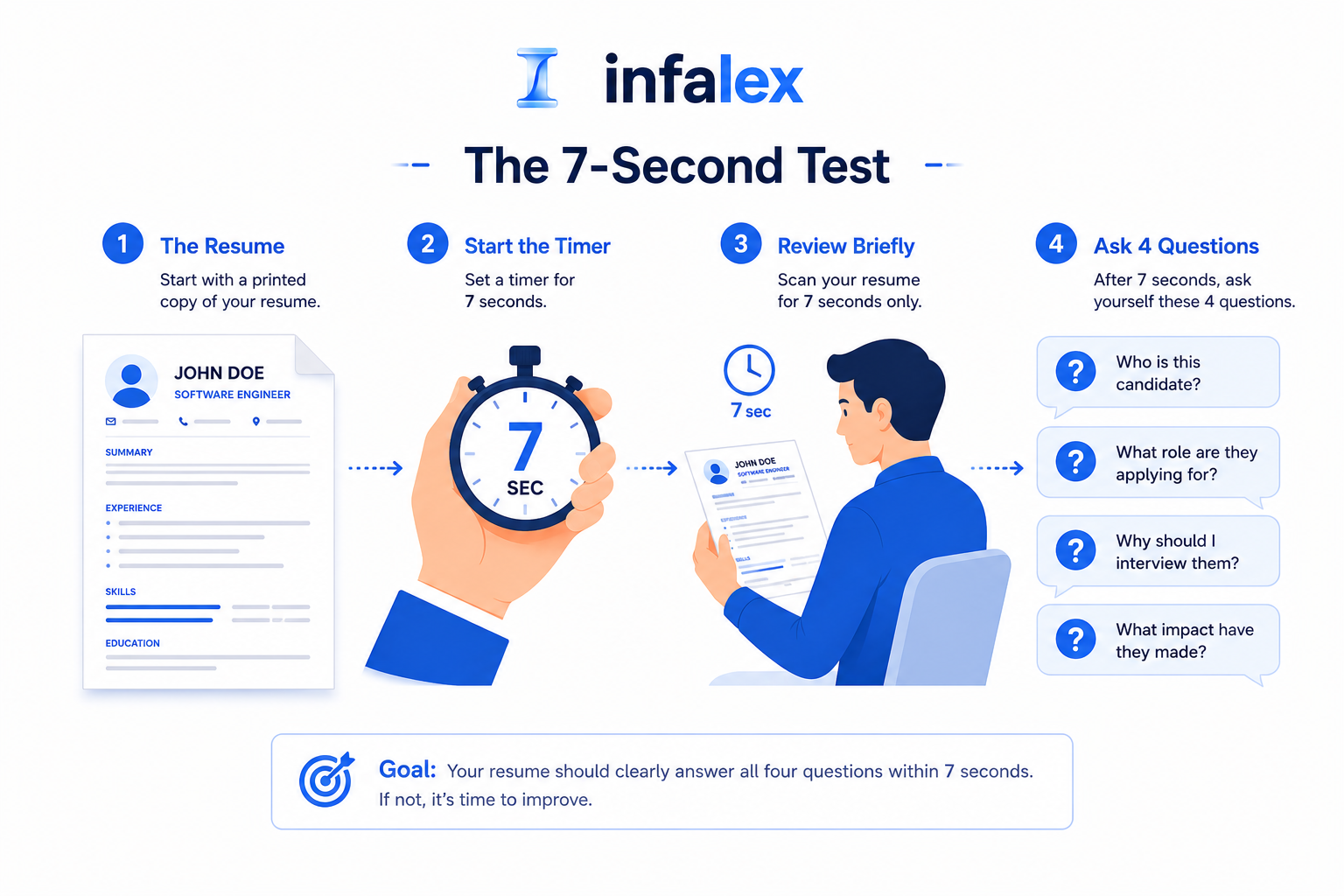
Want to check your resume yourself? Hand it to someone who hasn't seen it, set a timer for seven seconds, and when it stops, ask: What's my job title? What role am I targeting? What are my strongest skills? Did any achievement stand out?
If they can't answer at least three of those, your top section needs work. The information may exist — it just isn't visible enough.
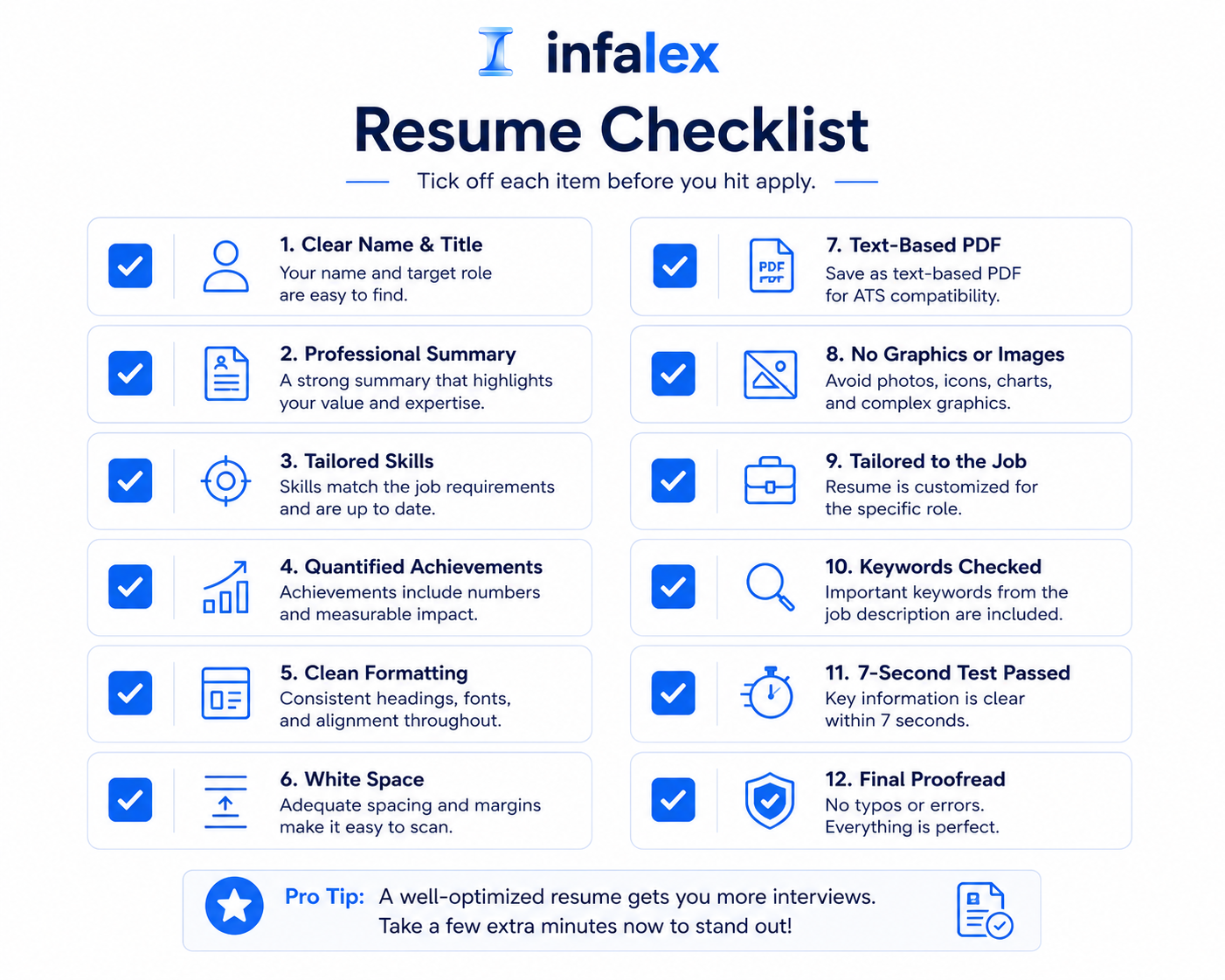
Quick Resume Checklist
- ⬜ Name, title, and contact info are clearly visible at the top
- ⬜ Professional summary communicates your role and value in 2–3 sentences
- ⬜ Skills section includes keywords from the target job description
- ⬜ Recent experience uses bullet points with measurable achievements
- ⬜ Clean single-column formatting with consistent fonts and white space
- ⬜ Saved as a text-based PDF — no graphics, skill bars, or icons
- ⬜ Tailored to the specific job description
- ⬜ Tested with Resumetra or a similar scanner
Conclusion
Recruiters don't spend seven seconds on your resume because they don't care. They spend seven seconds because they have to — and that scan is a filter, not a final judgment. The resumes that survive it earn a deeper read; the ones that don't disappear into the pile.
This isn't about having the most impressive career. It's about presenting what you have clearly, concisely, and in a way that matches what the recruiter needs. Clear formatting, strong achievements, relevant keywords, and a well-structured top half do more for your chances than any fancy template.
Your resume's job is to get you into the room. Make those first seconds count.
🔗 Keep Optimizing Your Job Search with Infalex
What Is an ATS Score? Everything You Need to Know — Understand the scoring system that determines whether a recruiter ever sees your resume.
How to Create an ATS-Friendly Resume That Actually Gets Interviews — The complete framework for building a resume that passes every ATS scan.
Top 25 Resume Mistakes That Get You Rejected Instantly — Every resume error that costs you interviews, with fixes.
Cracking the Code: Top Resume Keywords Recruiters Look for in 2026 — The exact words and phrases that ATS algorithms and recruiters prioritize.
How Long Should a Resume Be? The Definitive Guide — Settle the one-page vs. two-page debate with data-driven recommendations.
7 Resume Mistakes Costing You Job Interviews — The most costly resume errors and practical fixes for each.
Frequently Asked Questions (FAQs)
Q: Do recruiters really spend only 7 seconds on a resume?
A: The "7 seconds" figure comes from eye-tracking studies and represents an average initial scan — not a universal rule. Some resumes get two seconds; others get considerably more. If your resume's top section clearly communicates relevance, it earns more time.
Q: What do recruiters look at first on a resume?
A: Most notice the overall layout first, then your name, current job title, most recent company, and general structure. Within seconds, they're scanning for skills and keywords that match the role. The top third of your resume gets the most attention.
Q: How can I make my resume easier to scan?
A: Use a single-column layout with clear headings, short bullet points, and white space. Place your most relevant information — title, summary, skills, recent experience — in the top half. Avoid dense paragraphs and decorative graphics.
Q: What makes a recruiter reject a resume quickly?
A: Unclear formatting, no obvious match to the job, vague bullet points listing duties instead of achievements, spelling errors in technical terms, and resumes that clearly weren't tailored. Friction makes recruiters move on faster.
Q: Should I tailor my resume for every job?
A: Yes. You don't need to rewrite it from scratch, but your professional summary, skills section, and top experience bullets should reflect the specific role. Even small adjustments can significantly improve your match rate with both ATS and human reviewers.
Q: How important are keywords on a resume?
A: Critical for both ATS screening and human review. They help the machine identify relevance and help the recruiter confirm your skills match the job. Use them naturally within your experience and skills sections — not stuffed in artificially.
Q: Does ATS screening happen before a recruiter reviews my resume?
A: In most companies, yes. The ATS parses and ranks your resume before a recruiter sees it. But passing ATS doesn't guarantee a positive human review — the machine checks keywords and formatting; the recruiter evaluates context, fit, and achievement quality.
Q: How can I test whether my resume passes the 7-second scan?
A: Show your resume to someone unfamiliar with it for seven seconds, then ask what your role is, what skills you have, and whether any achievement stood out. If they can't answer, your visual hierarchy needs work. You can also use Resumetra for an instant formatting and keyword analysis.
Ready to optimize your career?
Join thousands of professionals using Infalex Resumetra to craft ATS-optimized resumes and land more interviews.